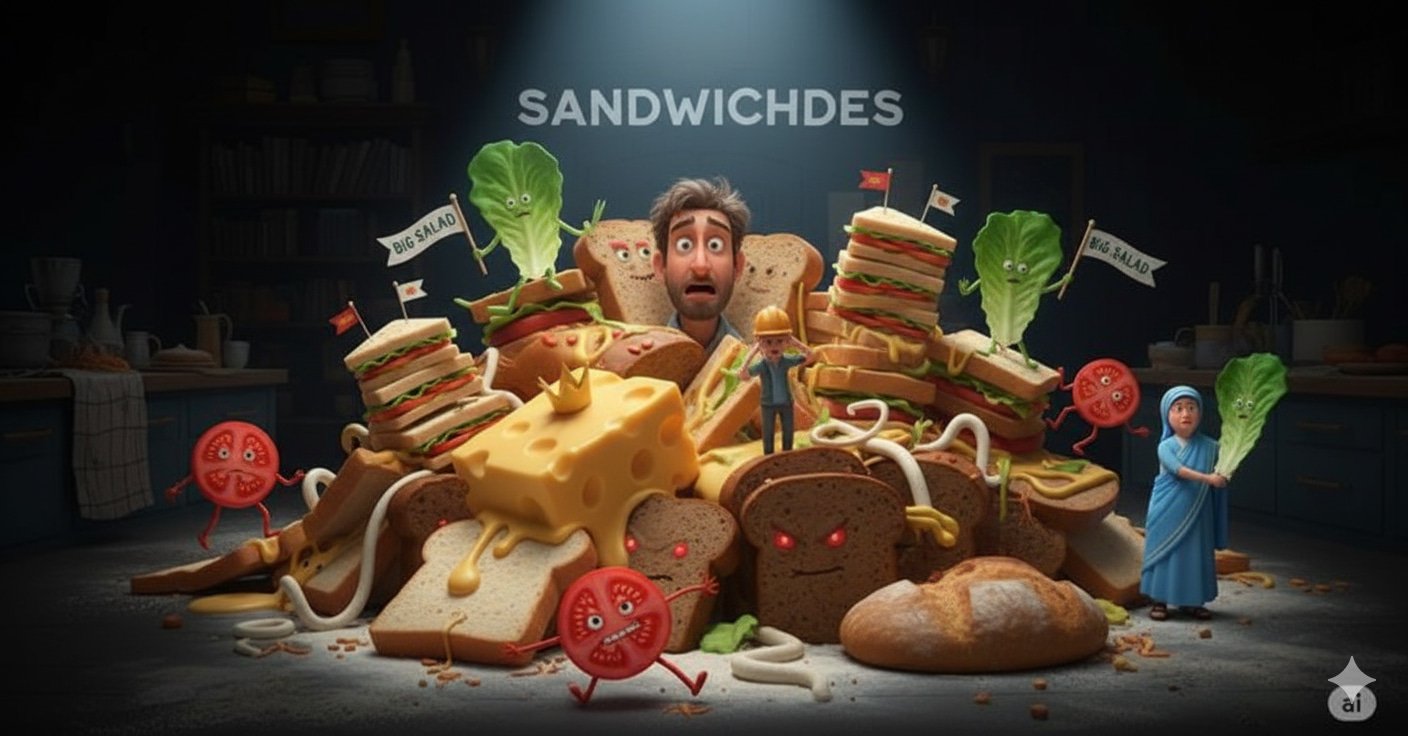
The Sandwiches Monologue
Sandwiches, darling, have been plotting since Earl invented the first one. Not the Earl of Sandwich—just Earl from Croydon. Lovely fellow. Catastrophic judgement.
They aren’t food. They’re architectural dictatorships wrapped in carbohydrate propaganda. Two slices of bread perch innocently on the counter, but sandwich them together and they start barking orders. ‘Fill me,’ they demand. ‘Make me matter.’ Next thing you know, it’s half past eleven and you’re layering ham and pickle like you’re brokering a ceasefire between feuding condiments.
Bread is the chief conspirator. Soft and yielding on the surface, but watch closely, and it absorbs, expands, judges your filling choices with quiet, doughy superiority. White bread masquerades as Switzerland, all neutral, but it’s clearly Tory. Brown bread performs virtue whilst smuggling seeds with suspicious motives. Sourdough? Pure pantomime. All tang and theatrics, demanding standing ovations for existing.
The fillings are where things turn sinister. Cheese believes itself royalty, melting only when it fancies, refusing to mingle with anything common. Tomatoes stage elaborate prison breaks, sliding sideways the instant you bite, leaving betrayal trails down your chin. Lettuce poses as virtue—crisp, noble, innocent. Yet it’s a sleeper agent for Big Salad, infiltrating decent sandwiches with leafy propaganda.
I knew a sandwich once that flat-out refused consumption. Genuine story. Perched there, smirking, daring me to try. The corners were aggressively triangular; no coincidence there. Triangles are geometry’s most belligerent citizens, mathematically speaking. We stared each other down. It won. I rang for pizza out of professional respect.
Consider ‘quick lunch’; the most audacious sandwich lie ever told. Nothing quick about assembling edible architecture. You need structural engineering, diplomatic immunity with mustard, and the patience of Mother Teresa negotiating with lettuce that refuses cooperation. By the time you’ve constructed the thing, you could’ve grown the wheat yourself.
Club sandwiches represent peak architectural arrogance. Three storeys of presumption, skewered with cocktail sticks like tiny wooden conquest flags. They aren’t lunch, they’re edible monuments to hubris. No human jaw evolved for vertical dining. It’s culinary imperialism disguised as sophistication.
Toasties deserve their own tribunal. Bread tortured by heat and pressure, flattened into submission until dignity abandons ship. The cheese inside turns vindictive and molten, plotting tongue-scalding revenge against the unwary. Toasted sandwiches aren’t meals. They’re initiation rites for the gastronomically masochistic.
Sandwiches have been winning this war since Earl’s first fateful bite. We think we’re making lunch, but we’re performing daily submission rituals. Standing there with knives and delusions, constructing tiny edible shrines to our own gullibility.
But here’s the thing. I whisper this because sourdough has supernatural hearing—sometimes, just sometimes, when stars align. Mayonnaise cooperates, a sandwich achieves transcendence. Not food, not architecture, but pure possibility pressed between two slices.
The bread probably orchestrated that too.
You are reading about
Sandwiches
darling!
Below is the unedited version of my post. Think of it as the backstage view: scruffy, overlong, sometimes brilliant by accident, sometimes a shambles. It hasn’t been tidied, polished, or persuaded into shape; it’s simply what spilt out first. I keep it here because you might enjoy seeing where the monologue began, before the edits stitched up its hems and powdered its nose.
Sandwiches Before It Was Ready
thing about sandwiches—well, everything edible, really—is that they’ve been plotting against us since Earl invented the first one. Not the Earl of Sandwich, mind you. Just Earl. Nice chap. Terrible judgement.
You see, sandwiches aren’t food. They’re architectural dictatorships wrapped in carbohydrate propaganda. Two slices of bread—innocent enough on their own—but sandwich them together and suddenly they’re issuing demands. “Fill me,” they whisper. “Make me important.” Before you know it, you’re standing in your kitchen at half past eleven, layering ham and pickle like you’re negotiating a peace treaty.
The bread, obviously, is the real villain. Soft and yielding on the outside, but watch it closely. It absorbs. It expands. It judges your filling choices with quiet, doughy superiority. White bread thinks it’s neutral, but it’s clearly Conservative. Brown bread pretends to be wholesome whilst harbouring seeds with suspicious intent. Sourdough? Pure theatre. All tang and attitude, demanding to be noticed.
But the fillings—oh, the fillings are where the conspiracy deepens. Cheese believes it’s aristocracy, melting only when it chooses, refusing to cooperate with anything common. Tomatoes stage elaborate escapes, sliding out sideways the moment you bite down, leaving trails of accusatory juice on your chin. Lettuce plays innocent, all crisp and virtuous. Yet it’s clearly working for Big Salad, infiltrating perfectly decent sandwiches with its leafy agenda.
I once knew a sandwich that refused to be eaten. True story. Sat there on the plate, looking smug, daring me to take a bite. The corners were perfectly triangular—no accident, that. Triangles are the most aggressive shape, mathematically speaking. I stared at it. It stared back. We reached an understanding: it would remain uneaten, and I would order pizza.
The greatest sandwich lie, of course, is the phrase “quick lunch.” Nothing quick about assembling edible architecture. You need engineering skills, diplomatic relations with condiments, and the patience of a saint dealing with lettuce that won’t lie flat. By the time you’ve constructed the thing, you could’ve grown the ingredients yourself.
Club sandwiches are particularly sinister. Three storeys of presumption, held together by cocktail sticks like tiny wooden swords. They’re not food; they’re siege weapons disguised as lunch. No human mouth was designed for that vertical challenge. It’s culinary hubris.
And don’t start me on toasties. Bread that’s been through trauma, pressed flat and heated until it screams. The cheese inside, molten and vengeful, plotting third-degree burns for the unwary tongue. Toasted sandwiches aren’t meals—they’re initiation rites.
The truth is, sandwiches have been winning this war for decades. We think we’re making lunch, but we’re really performing rituals of submission. Standing there with our knives and our hopes, constructing tiny edible monuments to our own hunger.
But here’s the thing—and I whisper this because the sourdough might be listening—sometimes, just sometimes, when the stars align. The mayonnaise cooperates, and a sandwich becomes transcendent. Not food, not architecture, but pure possibility between two slices.
Just don’t tell them I said so.